
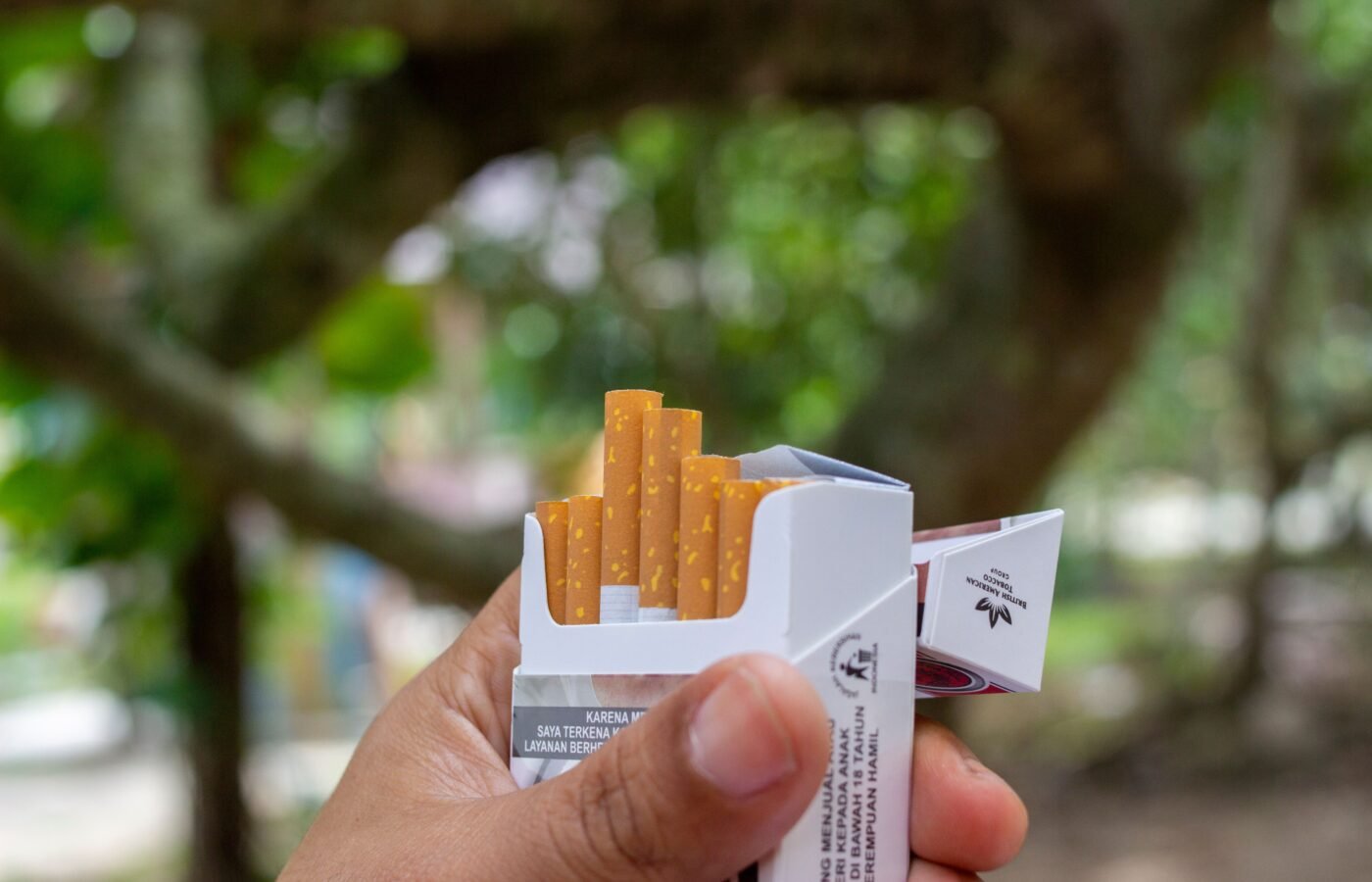
Quick Answer: Nicotine addiction is a physical rewiring of the brain, not a character flaw. Nicotine reaches your brain within seconds, floods the reward system with dopamine, and your brain responds by building more nicotine receptors. Those extra receptors are why you crave, and why stopping feels so wrong at first. The good news is that the rewiring is reversible. Your brain begins returning to normal within weeks, and the addiction breaks when you stop fighting the craving and start changing the pattern underneath it.
If you have ever stood in the cold at 2 am, annoyed at yourself, smoking a cigarette you did not even enjoy, you already know something the pamphlets never tell you. Nicotine addiction is not about enjoyment. By the time it has hold of you, it is not really about pleasure at all.
It is about relief. And there is a reason for that, written into your brain chemistry.
What is nicotine addiction?
Nicotine addiction is a physical dependence on nicotine, driven by measurable changes in the brain’s reward system. It is not a lack of discipline, and it is not a personality defect. It is what happens when a fast-acting drug is delivered to the brain thousands of times a year.
Here is the mechanism, in plain language. When you inhale cigarette smoke, nicotine is absorbed through the lungs and reaches the brain within seconds. Once there, it binds to receptors called nicotinic acetylcholine receptors and triggers a release of dopamine in the reward pathway, the same circuitry that rewards you for eating when hungry or drinking when thirsty.
Your brain reads that dopamine surge as: whatever you just did, do it again.
The National Institute on Drug Abuse notes that this dopamine surge reinforces the behaviour, and that repeated exposure changes how sensitive those circuits are, along with brain circuits involved in learning, stress, and self-control. That last part is worth reading twice. Nicotine does not just create a craving. It quietly reshapes the systems you would use to resist the craving.
Why is nicotine so addictive?
Three things make nicotine unusually good at capturing a brain. Take them together, and you understand why quitting is hard for almost everyone who tries.
1. It is fast
Speed is the single biggest factor in how addictive a drug becomes. Nicotine goes from your lungs to your bloodstream to your brain in seconds. That tight gap between the action and the reward is exactly the pattern the brain learns fastest from. Slow rewards teach the brain slowly. Nicotine teaches it almost instantly.
2. It repeats, constantly
Someone smoking twenty a day, taking around ten puffs per cigarette, delivers roughly two hundred hits of nicotine to the brain every single day. That is around seventy thousand repetitions a year. No habit in your life gets rehearsed that many times. Not brushing your teeth, not your commute, not your job.
3. Your brain adapts by building more receptors
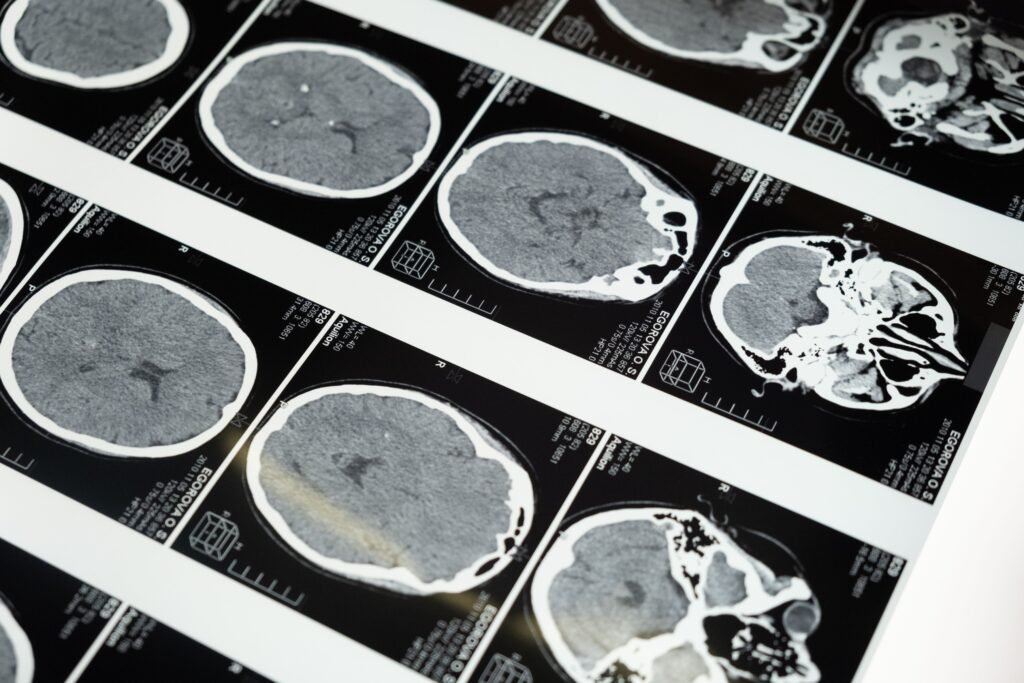
This is the part almost nobody explains, and it is the key to the whole thing. Faced with repeated nicotine, the brain does not simply endure it. It adapts by increasing the number of nicotine receptors. It is a sensible response to an unusual environment: the brain is recalibrating to what it now considers normal.
The problem arrives when you quit. Those extra receptors are still there, and they are now sitting empty.
You are not craving nicotine because you are weak. You are craving it because your brain built more places for it to land, and now they are all vacant.
That empty-receptor state is what withdrawal is. It is not damage. It is not a warning sign. It is the sound of your brain recalibrating back toward normal, and it is temporary.
Related Article: Nicotine Withdrawal Timeline – How Long Does Nicotine Withdrawal Last?
Why does quitting feel like relief, not pleasure?
Ask a long-term smoker whether they enjoy cigarettes and you often get a strange, honest pause. Most do not, particularly. So why do they keep going?
Because somewhere along the line, the reward changed. Early on, nicotine gave a genuine lift. But once your brain has adapted, the baseline shifts down. Without nicotine you feel irritable, restless, and slightly wrong. With nicotine, you feel normal again.
So the cigarette stops being a pleasure and becomes a repair. You are no longer smoking to feel good. You are smoking to stop feeling bad. Boss puts it more bluntly:
You are not craving nicotine. You are craving relief. Those are not the same thing.
This distinction matters enormously because relief can come from somewhere else. Nicotine has simply monopolised the supply.
What are the signs of nicotine addiction?
Physical dependence usually shows up in a recognisable cluster. You may notice several of these:
- You smoke your first cigarette within 30 minutes of waking, often the strongest single indicator of dependence
- You have tried to stop before, and could not keep it going
- You keep smoking despite knowing exactly what it is doing to your health
- You get irritable, restless, or anxious when you cannot smoke
- You arrange your day around opportunities to smoke, or feel uneasy without a supply
- You smoke when you are ill, or in weather you would never otherwise stand in
If several of those land, you are not weak-willed. You are physically dependent, which is a different problem with a different solution.
What does nicotine withdrawal actually feel like?
Withdrawal is the direct consequence of everything above: the empty receptors, the dopamine dip, the brain recalibrating. The CDC lists the common symptoms and, importantly, makes one point clearly: withdrawal is uncomfortable, but it cannot hurt you.
Most people experience some combination of:
- Cravings, the most common symptom of all
- Irritability, frustration or anger
- Restlessness and difficulty sitting still
- Trouble concentrating
- Anxiety or low mood
- Disrupted sleep
- Increased appetite
Symptoms typically begin within hours, peak around the second or third day, and ease over the following weeks as the receptor changes reverse. If you want the full hour-by-hour map of that process, read our nicotine withdrawal timeline.
One honest note on mood. The CDC makes the point that smoking can appear to help with anxiety or low mood, but that is misleading: the lift you feel is nicotine relieving withdrawal, not nicotine treating the anxiety. Encouragingly, after a few months smoke-free, people’s anxiety and depression levels are often lower than when they were smoking. If low mood persists beyond a month or feels severe, that deserves a clinician, not solo endurance.

Can your brain recover from nicotine addiction?
Yes, and this is the most untold fact in the entire subject.
The receptor changes that drive craving are not permanent. Brain imaging research has shown that the elevated receptor levels in people who smoke begin returning toward the levels seen in non-smokers within a few weeks of quitting. The physical machinery of the addiction is dismantling itself while you get on with your life.
That is why withdrawal has a shape rather than being a flat wall. The first days are the loudest because the gap between what your brain expects and what it is getting is at its widest. As receptor levels normalise, the gap closes, and the noise drops.
Your body starts recovering almost immediately, too. According to the CDC, heart rate begins dropping back toward normal within about 20 minutes of your last cigarette, and the nicotine level in your blood falls to zero at around 24 hours.
Related Article: How to Quit Smoking for Good (Even If You’ve Tried Before)
How do you actually break nicotine addiction?
If addiction is physical dependence plus a heavily rehearsed behavioural pattern, then breaking it needs to address both. Willpower alone attacks neither. Here is what it does.
Treat the chemistry with the right tool
Nicotine replacement therapy, patches, gum, lozenges, inhalers, and sprays, is supported by the NHS and Cleveland Clinic as an evidence-based way to soften withdrawal, and using it properly can roughly double your chances of quitting. Prescription medications can help too, and are worth a conversation with your GP. Using NRT is not cheating, and it is not a weakness. It is using the correct instrument for a chemical problem.
Break the cue, not just the craving
Remember those seventy thousand annual repetitions. Every one of them welded nicotine to a context: the coffee, the car, the phone call, the pub, the moment after a meal, the silence at 2 am. Those cues now trigger the craving on their own.
So map them. Find your three worst windows and change something structural about each one, before the craving arrives, rather than while you are inside it. Cues that are defused in advance are far easier to beat than cues you meet head-on.
Change who you are, not just what you do
There is a quiet but enormous difference between “I am trying to quit” and “I do not smoke.” The first is a fight you must win every single day. The second is a decision you made once. When your identity moves, the craving stops being a temptation to resist and starts being irrelevant to who you are.
Do not face the hardest moments alone
Statistics do not stop cravings. Support does. The moment that breaks most quit attempts happens alone, usually at night, when there is nobody to talk to and the craving fills the silence. Having something there in that exact moment, that knows your patterns and tells you the truth, changes outcomes more than any amount of gritted teeth. That is precisely what Boss was built for.
The bottom line
Nicotine addiction is a real, physical, measurable change in your brain, not a verdict on your character. Nicotine hijacks the reward system; your brain builds more receptors to cope, and those receptors are what scream when you stop.
But every part of that is reversible. The receptors normalise. The cravings shrink. The cues can be rewired. And the person you are underneath the addiction is still in there, waiting for you to stop treating this as a test of toughness and start treating it as what it actually is: a pattern that can be changed, with the right tools and the right support.
Frequently asked questions
Is nicotine addiction a physical or psychological addiction?
Both. Nicotine creates a genuine physical dependence by increasing the number of nicotine receptors in the brain, which drives cravings and withdrawal. On top of that sits a heavily rehearsed behavioural pattern, where everyday cues like coffee, driving or stress trigger the urge on their own. Effective quitting addresses both layers.
How long does it take to break nicotine addiction?
Physical withdrawal usually peaks around days 2 to 3 and eases over the following 2 to 4 weeks as brain receptor levels return toward normal. The behavioural side, cravings tied to habits and triggers, can persist for months, but it weakens every time you meet a trigger without smoking.
Why do I still crave cigarettes when I do not even enjoy them?
Because once your brain has adapted to nicotine, smoking stops delivering pleasure and starts delivering relief. You feel irritable and wrong without it, and normal with it. You are not chasing enjoyment anymore. You are repairing a deficit that nicotine itself created.
Is nicotine addiction a sign of weak willpower?
No. Nicotine addiction is a physical change in brain chemistry, driven by a fast-acting drug delivered thousands of times a year. Framing it as a willpower failure is not just unkind; it is inaccurate, and it points people toward a strategy that does not work.
Does nicotine replacement therapy work?
No. Nicotine dependence is a physical change in brain chemistry, and nicotine replacement therapy is the evidence-based tool for treating it. Refusing an effective tool in order to prove your toughness simply makes success less likely. Using the right instrument is competence, not weakness.
Related Article: Nicotine dependence
Related Article: Why People Start Smoking and Why It’s Hard to Stop